Understanding SVLK and Legal Timber in Indonesia
For international wholesale buyers, sourcing bespoke furniture from Bali and other Indonesian regions requires a deep understanding of the legal frameworks that ensure sustainability and legality. The SVLK certification plays a pivotal role in verifying that your furniture investments are ethically and legally sourced, providing a reliable foundation for your procurement strategies.
Understanding SVLK Certification
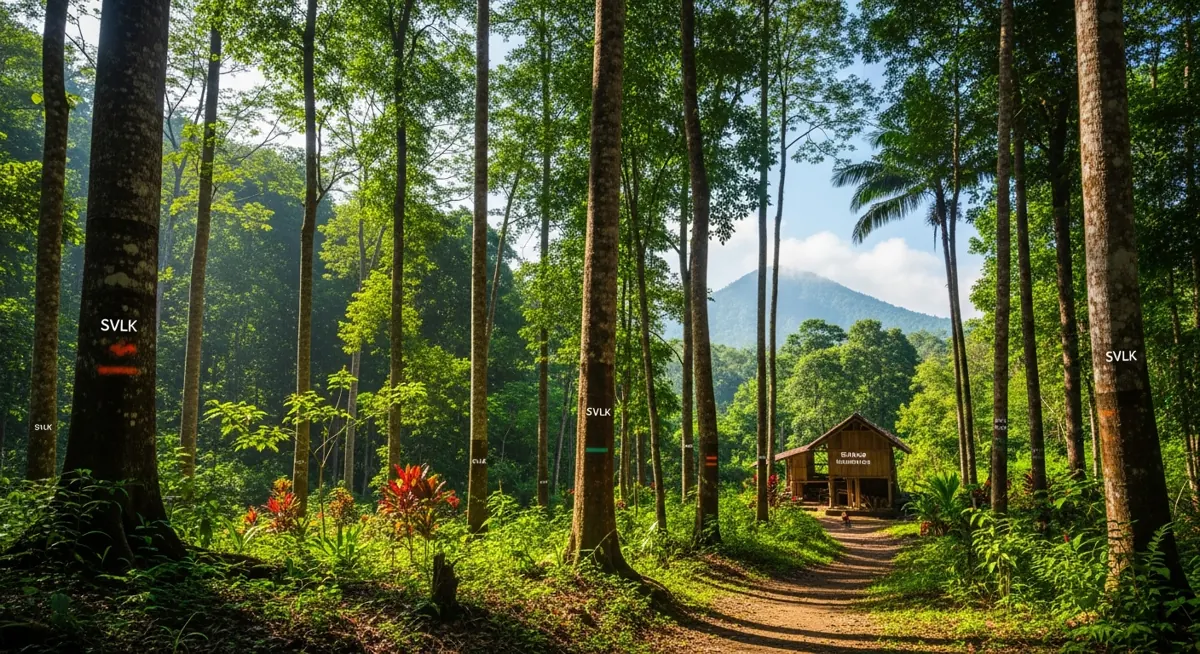
SVLK, or Sistem Verifikasi Legalitas Kayu, is Indonesia’s mandatory Timber Legality Assurance System. It ensures that all timber products, including furniture, are legally harvested and traceable. Each export consignment must include a V-Legal Document, which is a reflection of its compliance with legal standards. This certification is valid for three years with annual surveillance audits to ensure ongoing compliance. The SVLK system is integral to Indonesia’s Forest Law Enforcement, Governance and Trade (FLEGT) partnership with the European Union. This partnership provides a strong foundation for buyers needing to comply with the EU Deforestation Regulation (EUDR) and the US Lacey Act, although importers must still conduct their own due diligence. For more information on SVLK and V-Legal documents, visit the official SVLK website.
SVLK vs. FSC Certification
While SVLK is a mandatory certification for all Indonesian timber exports, the Forest Stewardship Council (FSC) certification is a voluntary standard that some manufacturers adopt to demonstrate additional sustainability efforts. SVLK ensures legality, focusing on the timber’s legal harvesting and traceability. In contrast, FSC covers broader sustainability practices, including environmental and social considerations in forest management. Factories may choose to add FSC certification on top of SVLK to appeal to buyers with specific sustainability requirements. It’s important to note that SVLK is not FSC, and each serves different roles in the supply chain. Buyers should confirm factory certifications during the sourcing process to align with their procurement policies.
Materials and Craftsmanship
Indonesia is renowned for its diverse range of high-quality materials used in furniture production. Key materials include solid teak and reclaimed/recycled teak from Jepara, mahogany, suar/acacia for live-edge designs, and a variety of natural and synthetic materials like rattan, water hyacinth, and seagrass. These materials are crafted into furniture pieces that combine traditional techniques with modern designs. For a detailed overview of these materials and their craftsmanship, visit our materials and craftsmanship page. Jepara, as a historic hub, is particularly famous for its teak and carved furniture, while Bali offers more design-led, contemporary pieces.
Quality Control and Finishing
Ensuring high-quality standards is paramount in the furniture export business. At Anara Atelier, we employ rigorous quality control (QC) measures throughout the production process. Each piece undergoes multiple inspections, from material selection to the final finishing stage. Our QC team checks for consistency in dimensions, structural integrity, and finish quality. Finishing options range from natural and stained finishes to painted and distressed looks, catering to diverse market preferences. We use eco-friendly, non-toxic finishes to align with global safety standards, ensuring that our furniture is safe for end consumers and environmentally responsible. This attention to detail not only enhances product longevity but also ensures that our furniture meets the aesthetic and functional expectations of international buyers.
Container Loading and Minimum Order Quantities
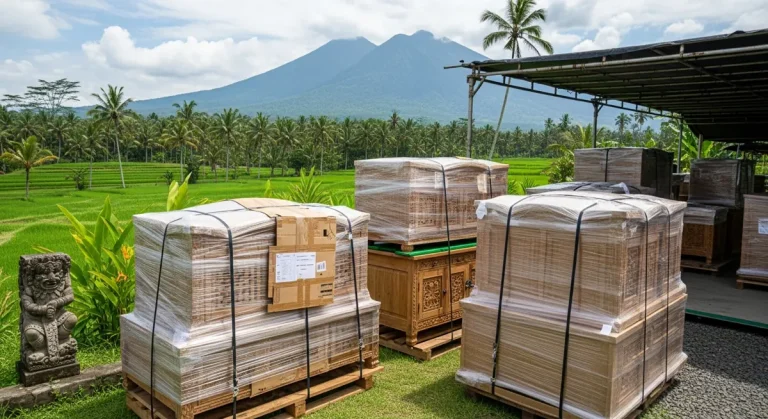
Understanding container capacities and minimum order quantities (MOQs) is crucial for efficient shipping processes. A 20ft container can hold approximately 28 CBM, while a 40ft container can accommodate around 58 CBM, and a 40ft High Cube (40HQ) can hold up to 68 CBM. Bulky upholstered or woven pieces often fill the volume before reaching weight limits, whereas dense knock-down items might hit weight limits first. Typically, per-item MOQs are 5-20 pieces for solid-wood furniture and 10-30 pieces for woven/rattan items. The minimum order usually requires filling one 20ft container, about 25-28 CBM. Mixed-model and mixed-material containers are standard, provided each item meets its MOQ and the total load meets the minimum CBM. For more on this, visit our furniture export shipping process page.
Incoterms and Export Ports
In Indonesia, FOB is the most common Incoterm used in furniture exports. Under FOB, the seller is responsible for export clearance and loading at the port, while the buyer arranges sea freight and insurance. Other terms like CFR/CNF and CIF are also available. The main export seaports for furniture are Tanjung Perak in Surabaya, Tanjung Emas in Semarang, and Benoa in Bali. These ports are well-equipped to handle large volumes and are strategically located to facilitate international shipping. Understanding these terms and port operations is essential for efficient logistics management. For detailed insights, refer to our shipping process page.
Certification and Compliance
Beyond SVLK, compliance with other international standards is often required by buyers. Our furniture can be certified to meet various international standards, including CARB for emissions, ensuring that products are safe for indoor use. We also work closely with third-party auditors to confirm compliance with specific buyer requirements. This proactive approach in certification ensures that our products are not only legally sourced but also meet the health and safety standards expected in key markets. Buyers can request documentation during the procurement process to verify compliance, providing an added layer of assurance in their sourcing decisions.
Production Lead Times and Payment Terms
Lead times for furniture production in Indonesia typically range from 30 to 60 days, depending on the order size and finishing requirements. Sea-freight transit times are approximately 3-5 weeks to destinations in the US, EU, and Australia, with shorter durations for the Middle East and Asia. These timelines can vary based on routes and seasons, so it’s advisable to confirm current schedules. Payment terms generally involve a 30-50% deposit by T/T (bank transfer) to start production, with the balance payable against a copy of the Bill of Lading (B/L). Terms are negotiable for repeat buyers, and specifics should be confirmed per order.
Export Markets and OEM/ODM Capabilities
Indonesia’s furniture export markets are diverse, including the US, EU, Australia, the Middle East, and Japan. The country’s OEM/ODM capabilities allow factories to manufacture according to a buyer’s drawings, specifications, and finishes, with pre-production samples provided for approval. This flexibility supports private-label and branding opportunities, enabling buyers to tailor products to their market needs. Jepara’s expertise in teak and classic furniture complements Bali’s contemporary and design-led offerings, making Indonesia a versatile source for various furniture styles. For more on sourcing options, explore our sourcing page.
For comprehensive sourcing solutions and to request a quote, please visit our contact page. Our team is ready to assist with your furniture procurement needs, ensuring compliance with all legal and quality standards.